Emergency warning lights are designed to attract attention. For police vehicles, fire apparatus, ambulances, roadside assistance vehicles, utility trucks, and other vehicles that use warning lighting, visibility is an important part of the equipment’s purpose. At the same time, light that reflects toward the vehicle operator can become distracting, particularly when a warning light is mounted behind or near the windshield.
This is where a light-bar flashback guard can become useful.
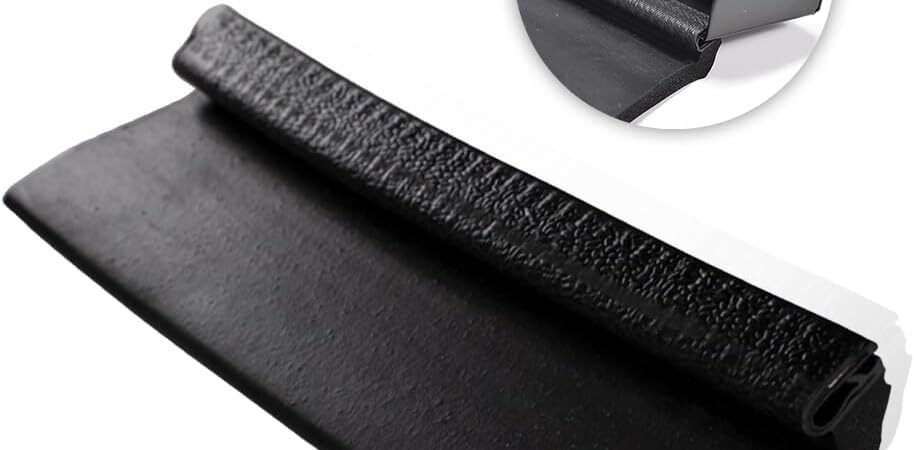
The UBL 18 Inch Large Black Rubber Gasket for Light Bar is a component designed to sit around compatible interior warning-light equipment and help reduce unwanted reflections from the light source onto the windshield and surrounding interior surfaces. Product information identifies it as a black rubber gasket intended for visor, dash, stick, and surface-mounted emergency warning light applications. It is listed under model UBL-AC-LG and is associated with an 18-inch format.
Rather than producing light itself, the gasket works as a physical barrier around an existing warning-light installation. That distinction is important. The product is not an emergency light bar, power supply, mounting bracket, or replacement light. Its purpose is to help manage unwanted light reflection from equipment that is already installed.
The concept is particularly relevant when a warning light produces a bright reflection on the windshield or other nearby surfaces. A properly positioned black barrier can help limit the amount of light traveling toward the driver’s field of view while allowing the warning light to remain visible from outside the vehicle.
This article explains what a light-bar gasket does, how the UBL 18-inch design can be used, what to consider when checking compatibility, and how flashback guards compare with other approaches to managing reflections from emergency vehicle lighting.
What Is a Light-Bar Flashback Guard?
A flashback guard is a physical accessory designed to reduce unwanted light reflection from a warning-light installation.
The term “flashback” in this context generally refers to light from an interior or windshield-mounted warning device reflecting from the windshield, dashboard, hood, or other nearby surfaces back toward the vehicle operator.
Emergency warning lights are intentionally bright. When the light is positioned inside a vehicle, some of that illumination can travel in directions that are not useful for warning other road users. A portion can strike the windshield and reflect back into the cabin.
The result can be distracting glare.
A gasket such as the UBL 18-inch model is designed to create a dark physical boundary around the light source. Product listings describe the gasket as a flashback guard intended to reduce windshield reflections and help keep unwanted illumination away from the driver’s line of sight.
The principle is similar to using a hood or shade around a light source. Instead of changing the light’s electrical output, the barrier controls where some of the light can travel.
What the UBL 18-Inch Gasket Is Designed to Do
The UBL gasket is intended for emergency warning-light installations where reflections are a concern.
Available product information identifies the component as a black rubber gasket, with an 18-inch size and an intended interior automotive application. It is listed as a universal-fit component for a range of light brands and models.
The general purpose can be broken into several functions:
- Create a dark barrier around the light
- Reduce unwanted windshield reflections
- Help control stray illumination inside the vehicle
- Provide a cleaner transition between the light and mounting surface
- Accommodate compatible visor, dash, or surface-mounted warning-light installations
The gasket is therefore best understood as an optical and installation accessory rather than a lighting component.
It does not make an emergency light brighter, change its flash pattern, or replace the light’s electronics.
Key Features
18-Inch Format
The product is designed around an 18-inch length.
This is particularly relevant because interior warning lights are available in different sizes. A gasket must physically correspond to the equipment and installation area in order to work correctly.
An 18-inch component may be appropriate for compatible light bars in that general size range, but the stated length alone should not be treated as proof of universal compatibility.
Before installation, users should compare the dimensions and configuration of their light with the manufacturer’s specifications.
Black Rubber Construction
The gasket uses black rubber.
The color serves a functional purpose in addition to appearance. A dark, non-reflective material can help absorb or block light around the edges of a warning-light installation rather than introducing another reflective surface into the cabin.
Product listings describe the material as weather-resistant and suitable for automotive use.
Rubber also has practical advantages for an accessory that needs to conform around a light housing. Its flexibility can make it easier to accommodate minor variations in shape than a rigid piece of material.
Flashback Reduction
The primary purpose of the gasket is to reduce unwanted light reflection.
A windshield-mounted warning light can produce a bright reflection when viewed from inside the cabin, particularly at night or in low-light conditions.
A black barrier positioned around the light can help limit the amount of illumination reaching the windshield at unwanted angles.
The goal is not to eliminate the warning light’s external visibility. Instead, the accessory is intended to control stray light while the warning device continues performing its intended warning function.
Universal-Fit Positioning
Product information describes the UBL gasket as compatible with a range of major light brands and models, including brands such as Ultra Bright Lightz, Feniex, Whelen, and Federal Signal.
“Universal fit” should still be interpreted carefully.
A universal-fit accessory is generally designed to work with multiple configurations, but it does not mean that every light bar will fit perfectly without adjustment.
Dimensions, housing shape, mounting arrangement, and installation location should be checked before use.
Interior Automotive Application
The product is identified for interior vehicle use.
That makes sense given its primary purpose: controlling reflections from warning lights mounted inside a vehicle.
Possible installations can include visor-mounted, dash-mounted, or other interior warning-light arrangements, depending on the dimensions and design of the specific light.
No Complex Assembly
Available product specifications indicate that no assembly is required for the gasket itself.
The practical installation process will depend on the warning-light system and how the gasket is intended to fit around it.
The gasket should not be considered a replacement for the light’s own mounting hardware.
Why Windshield Flashback Can Be a Problem
Understanding the optical problem makes the purpose of a flashback guard easier to appreciate.
When a bright light source is placed inside a vehicle, some light travels toward the windshield. Glass is transparent, but it is also capable of reflecting a portion of incident light.
During daylight, the reflected light may be less noticeable because the surrounding environment is already bright.
At night, however, a bright interior warning light can produce a much more noticeable reflection.
The reflected image can appear as bright colored flashes or patterns on the windshield.
That can be distracting because the driver’s eyes must process both the road environment and the reflected light.
A flashback guard addresses the problem physically rather than electronically.
Instead of reducing the warning light’s output, it attempts to block unwanted directions of illumination.
How It Can Be Used
The UBL gasket is intended to be integrated with a compatible emergency warning-light installation.
A general installation process may involve several stages.
1. Identify the Warning Light
Start by identifying the light bar or warning-light unit that will be used with the gasket.
Check the manufacturer’s specifications, dimensions, mounting configuration, and intended gasket compatibility.
2. Measure the Light
An 18-inch gasket should be compared with the actual dimensions of the light.
Do not rely solely on the product title.
Measure the relevant length and inspect the shape of the housing. The way the gasket fits around the light is just as important as its overall length.
3. Inspect the Mounting Location
Determine whether the warning light is mounted on a visor, dashboard, windshield area, or another interior surface.
The gasket needs to work with the existing installation without obstructing important vehicle controls, vents, visibility areas, or safety equipment.
4. Position the Gasket
Place the gasket according to the manufacturer’s intended orientation.
The black rubber should create a barrier around the relevant edges of the warning light.
5. Check Visibility
Once installed, inspect the setup from the driver’s seating position.
The warning-light system should remain appropriately positioned, and the gasket should not create an obstruction in the driver’s field of view.
6. Test in a Controlled Environment
If the equipment is used for professional emergency or roadside applications, it is useful to inspect the installation in both daylight and low-light conditions before relying on it operationally.
Look for reflections on the windshield and other interior surfaces.
The objective is to identify whether additional positioning adjustments are necessary.
Practical Installation Considerations
A gasket may be simple compared with the electronic components of an emergency-light system, but its positioning still matters.
Keep the Driver’s View Clear
Any accessory installed near the windshield should be positioned so that it does not unnecessarily obstruct the driver’s view.
The gasket should control unwanted light rather than becoming another visual obstruction.
Avoid Interfering With Airbags
Modern vehicles may contain airbags in dashboards, pillars, doors, steering wheels, and other locations.
Interior equipment should never be installed in a way that interferes with an airbag deployment path.
If the installation location is uncertain, the vehicle manufacturer or a qualified automotive professional can provide appropriate guidance.
Check the Existing Mounting System
The gasket does not necessarily replace the mounting hardware supplied with the warning light.
Make sure the light itself is securely mounted and that the gasket does not compromise that mounting arrangement.
Check for Heat
LED warning lights generally produce less heat than some older lighting technologies, but electronic lighting equipment can still generate heat.
Users should follow the light manufacturer’s clearance and ventilation requirements.
A rubber accessory should not be installed in a way that traps heat where the lighting manufacturer requires airflow.
Who May Find This Type of Accessory Suitable?
Emergency Service Fleets
Police, fire, EMS, and other authorized emergency-service vehicles can use interior warning lighting in different configurations.
A flashback guard may be relevant when the installation creates unwanted windshield reflections.
Actual use of emergency warning equipment is subject to local laws, regulations, vehicle classifications, and agency policies.
The gasket itself does not provide legal authorization to operate emergency lights.
Roadside Assistance Vehicles
Tow trucks and roadside assistance vehicles may use warning lights when working near traffic.
A properly configured lighting system can help provide visibility around a stopped vehicle, while a flashback guard can help address unwanted reflections inside the cabin.
Again, the legality and required specifications for warning lighting vary by jurisdiction.
Utility and Work Vehicles
Certain utility, maintenance, construction, and transportation vehicles use warning lights to identify work areas or vehicles operating in potentially hazardous environments.
A compatible gasket may be useful where interior warning lights create unwanted glare.
The appropriate lighting color, flash pattern, mounting location, and operating rules depend on the vehicle’s role and local requirements.
Fleet Managers
For organizations operating several vehicles, standardized accessories can simplify equipment maintenance.
A gasket designed around a commonly used light size can be useful when multiple vehicles use compatible warning-light configurations.
Fleet managers should still verify compatibility before purchasing multiple units.
Important Things to Consider
Confirm the Dimensions
The first consideration is physical compatibility.
An 18-inch gasket is not automatically compatible with every 18-inch light.
Different manufacturers can use different housing dimensions, edge profiles, and mounting arrangements.
Compare the gasket with the actual light before installation.
Check Brand Compatibility
Available product information identifies several major emergency-light brands as compatible with the UBL gasket.
However, product families can include many different sizes and generations.
A light from a compatible brand does not necessarily mean every model from that brand will fit.
The exact model and dimensions matter.
Consider the Installation Orientation
The gasket must be positioned so that it actually blocks the unwanted light path.
If it is installed incorrectly, light may still escape toward the windshield.
Some installations may require adjustment to achieve the intended shielding effect.
The manufacturer’s instructions should take priority over assumptions about orientation.
Check the Windshield Area
Before installation, examine the area around the light.
Consider:
- Driver visibility
- Rearview mirror position
- Sun visors
- Dashboard controls
- Windshield sensors
- Cameras
- Defrost vents
- Airbag deployment areas
Modern vehicles often contain sensors and cameras around the windshield, so interior accessories should not interfere with those systems.
Consider Local Regulations
Emergency warning lights are regulated differently depending on location and vehicle type.
Some jurisdictions restrict who can use certain colors, flash patterns, or mounting positions.
Others may have specific requirements for public safety, utility, construction, or roadside vehicles.
A flashback guard does not change those requirements.
Vehicle operators should confirm that their lighting system complies with applicable laws and organizational policies.
Do Not Assume It Makes a Vehicle Safer in Every Situation
Reducing glare can address one specific issue, but overall vehicle safety depends on many factors.
Lighting equipment must be correctly installed.
Warning-light colors and patterns must be appropriate.
The driver must maintain visibility.
Other road users must be able to recognize the warning signal.
The vehicle must comply with applicable requirements.
A gasket is only one small component within that larger system.
Inspect the Rubber Periodically
Rubber can age over time.
Heat, sunlight, cleaning chemicals, temperature changes, and repeated handling can affect rubber materials.
Inspect the gasket periodically for:
- Cracking
- Hardening
- Splitting
- Deformation
- Loose sections
- Loss of proper fit
If the material no longer maintains its intended position, replacement may be appropriate.
How a Flashback Guard Differs From Other Solutions
There are several ways to manage unwanted reflections from emergency lighting. They serve different purposes.
Flashback Gasket vs. Light Hood
A light hood is a broader category of physical shielding that blocks light in selected directions.
A gasket can serve a similar optical purpose while also providing a flexible interface around a light housing.
The specific choice depends on the light’s design and mounting arrangement.
Flashback Gasket vs. Window Tint
Window tint changes the optical characteristics of the glass itself.
A gasket does not modify the windshield.
Instead, it attempts to prevent unwanted light from reaching the windshield in the first place.
Tint also has legal and visibility considerations that vary by jurisdiction.
For emergency-light flashback, physically shielding the source can address the problem more directly.
Flashback Gasket vs. Changing Light Position
Moving the warning light can sometimes reduce reflections.
However, relocation may not be practical if the vehicle’s mounting configuration is already established.
A gasket can allow the existing light position to remain while addressing some of the stray illumination.
That does not mean a gasket can compensate for every poor installation. If the light is positioned incorrectly, repositioning may still be necessary.
Flashback Gasket vs. Lowering Light Output
Reducing the light’s intensity can also reduce reflections.
However, warning lights are intended to remain visible.
Reducing output may therefore affect their intended function.
A physical barrier offers another approach: control unwanted directions of light without necessarily changing the light’s electrical output.
Flashback Gasket vs. Reflective Interior Surfaces
Dashboard materials, glass, trim, and other surfaces can all influence reflections.
A dark rubber gasket can help reduce light escaping around the edge of a light source.
It cannot eliminate every reflection generated elsewhere inside the vehicle.
Maintenance and Care
The gasket itself is a relatively simple component, but proper care can help maintain its usefulness.
Keep It Clean
Dust and residue can accumulate on rubber surfaces.
Use a cleaning method appropriate for the material and follow any manufacturer recommendations.
Avoid harsh solvents unless they are specifically approved for the material.
Avoid Excessive Heat
Vehicle interiors can become extremely hot when parked in direct sunlight.
Long-term exposure to high temperatures can accelerate aging in many rubber products.
Where practical, protect the equipment from unnecessary heat and prolonged direct sunlight.
Inspect the Fit
A gasket should remain positioned correctly around the warning light.
If it begins to sag, deform, detach, or leave significant gaps, inspect the installation.
A poor fit can reduce the accessory’s ability to control stray light.
Replace Damaged Components
A cracked or severely deformed gasket may no longer provide effective shielding.
Replacement is generally preferable to trying to repair a component that is no longer maintaining its original shape.
Understanding the Difference Between the Gasket and the Light
The product’s name can potentially cause confusion because it is associated with light bars.
The UBL gasket is not the light source.
It does not contain the LEDs needed to generate the emergency warning signal.
It is an accessory designed to work around an existing warning light.
This means buyers should make sure they are purchasing the correct component for their installation.
If a vehicle needs a complete warning-light system, that involves entirely different equipment, including the light itself, mounting hardware, wiring, controller, and potentially additional accessories.
The gasket addresses one specific issue: controlling unwanted light reflection.
Why Black Is Useful for Light Control
Color has a practical role in optical shielding.
A bright or reflective material around an emergency light could potentially create additional reflections.
Black rubber provides a relatively dark surface around the installation.
The goal is to create a visual barrier that absorbs or blocks stray illumination rather than redirecting it toward the windshield.
This is why matte or dark finishes are commonly used in light-shielding accessories.
The black color does not increase the brightness of the warning light. It is primarily part of the light-management function.
Using the Gasket With Different Vehicle Types
Passenger Vehicles Used for Authorized Emergency Service
Some passenger vehicles are equipped with interior warning lights for authorized emergency or official purposes.
In these applications, the gasket may help manage windshield reflections while maintaining the existing light installation.
SUVs and Trucks
Larger vehicles may have more dashboard or windshield space for interior warning-light equipment.
The same basic considerations still apply: compatibility, visibility, mounting, heat, and legal requirements.
Commercial Vehicles
Utility trucks, service vehicles, and other commercial platforms may use warning lighting depending on their work.
A gasket can be considered when a compatible interior light creates unwanted glare.
Roadside Assistance Vehicles
Vehicles operating around stopped traffic often use warning lighting to increase their visibility.
A flashback guard can be part of the interior lighting setup where the light source creates unwanted windshield reflections.
Frequently Asked Questions
What is the UBL 18-inch rubber gasket used for?
It is designed as a flashback guard for compatible interior emergency warning lights. Its purpose is to reduce unwanted reflections from the light source toward the windshield and vehicle operator.
Is this a light bar?
No. The UBL gasket is an accessory for an existing light bar or warning-light installation. It does not function as an independent warning light.
What size is the gasket?
The product is identified as an 18-inch large gasket.
What is it made from?
Available product information describes the component as a black rubber gasket and identifies the material as weather-resistant.
Is the gasket universal?
Product information describes it as having broad compatibility with major light brands and models. However, users should still confirm the dimensions and mounting configuration of their specific warning light before installation.
Can it be used with different emergency-light brands?
Available listings identify compatibility with brands including Ultra Bright Lightz, Feniex, Whelen, and Federal Signal. Exact compatibility depends on the individual light model and physical dimensions.
Does the gasket reduce windshield glare?
Its purpose is to reduce unwanted light reflection or “flashback” from interior warning lights toward the windshield. The amount of reduction will depend on the light, installation, orientation, and surrounding vehicle surfaces.
Does it make the emergency light brighter?
No. The gasket does not increase the electrical output of the warning light. It is designed to control unwanted light rather than produce or amplify illumination.
Can it completely eliminate every reflection?
It should not be assumed that any single gasket will eliminate every possible reflection. Reflections can come from the windshield, dashboard, hood, trim, and other surfaces.
Is it suitable for a regular passenger car?
The component is intended for compatible emergency warning-light installations. It is not generally necessary for ordinary vehicles without such equipment.
Does the gasket require assembly?
Available specifications indicate that the gasket itself does not require assembly. The warning light’s own mounting system may still require installation.
Can the gasket be used on a dashboard-mounted warning light?
Product information identifies visor, dash, stick, and surface-mount light applications. Exact fit should be verified for the particular light.
Can it be cut or modified?
Some third-party listings mention fitting adjustments for certain installations, but users should not assume modification is appropriate. Cutting or altering the gasket can affect its fit and shielding performance. Follow the manufacturer’s instructions for the specific product.
Is the gasket waterproof?
Some product listings identify waterproof or weather-resistant characteristics. However, the gasket should not be interpreted as making an entire warning-light assembly waterproof. The light itself must have its own appropriate protection.
Does the gasket replace a mounting bracket?
No. A gasket and a mounting bracket perform different functions. The gasket provides shielding and an interface around the light, while a bracket or other mounting hardware secures the light to the vehicle.
Is the gasket appropriate for emergency responders?
It may be relevant to authorized emergency vehicles using compatible interior warning lights. Operators should always follow agency procedures and applicable laws governing emergency-light equipment.
Can it be used on a tow truck?
A compatible installation may be possible for roadside-assistance or tow vehicles, but the vehicle operator should verify the physical fit and local requirements for warning lights.
How should the gasket be maintained?
Keep it clean, inspect it for cracking or deformation, and check periodically that it remains properly positioned around the light.
What should be checked before installation?
The most important checks include the light’s dimensions, mounting configuration, gasket compatibility, available windshield space, driver visibility, nearby vehicle systems, and applicable regulations.
Conclusion
The UBL 18 Inch Large Black Rubber Gasket for Light Bar is a specialized accessory designed to address a specific problem associated with interior emergency warning lights: unwanted light reflection toward the windshield and vehicle operator.
Unlike a warning light itself, the gasket does not generate illumination. Instead, its black rubber construction is intended to create a physical barrier around a compatible light installation, helping control stray light and reduce windshield flashback. Product information identifies it as an 18-inch gasket suitable for a range of visor, dash, stick, and surface-mounted warning-light applications.
Its practical value depends heavily on proper compatibility and installation. The fact that a warning light is approximately 18 inches long does not by itself guarantee that the gasket will fit. Housing dimensions, shape, mounting arrangement, and installation orientation should all be checked before use.
A flashback guard is also only one part of a larger vehicle-lighting system. It does not replace the light, mounting hardware, electrical components, or required safety equipment. It cannot guarantee the elimination of every reflection, and it should not be used as a reason to ignore problems with the underlying light installation.
For professional and authorized vehicle operators, managing interior glare can be an important part of creating a usable warning-light setup. A properly fitted dark gasket can help separate the light source from the windshield and reduce some of the unwanted illumination reaching the driver’s field of view.
At the same time, users should consider vehicle visibility, airbag locations, windshield-mounted sensors and cameras, heat management, local emergency-light regulations, and the manufacturer’s installation guidance before fitting any interior lighting accessory.
The UBL 18-inch gasket is therefore best understood as a focused light-management component rather than a standalone lighting product. Its role is relatively simple: provide a dark, flexible barrier around a compatible warning-light installation to help control unwanted reflections.