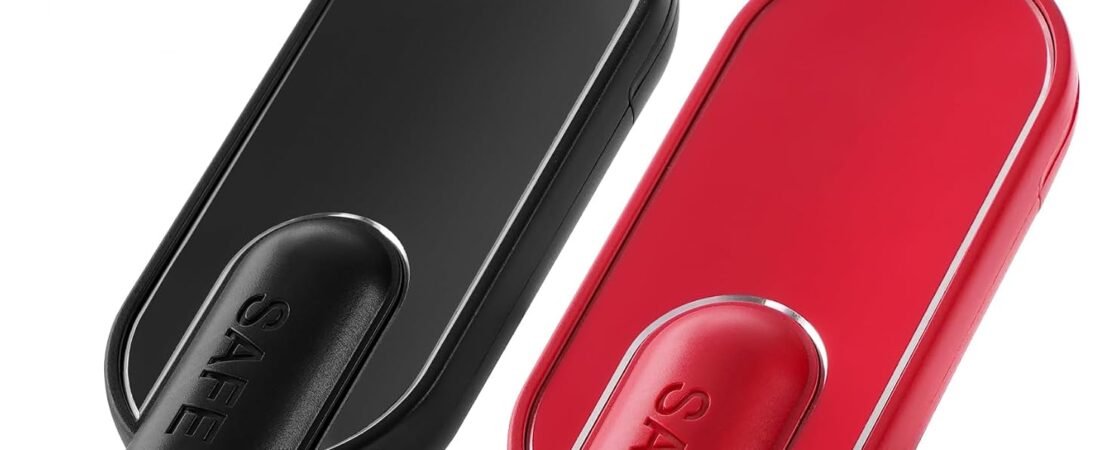
Most drivers spend very little time thinking about how they would leave a vehicle during an unusual emergency. In normal conditions, getting out of a car is as simple as opening a door and stepping onto the ground. In a serious collision, rollover, fire, flood, or other emergency, however, the normal exit route may not always be available.
A portable car glass breaker and concealed seat belt cutting tool is designed specifically for situations in which a vehicle occupant may need an alternative way to escape. These compact devices generally combine two functions: a mechanism intended to help break certain types of automotive side glass and a protected cutting edge intended to sever a seat belt when the buckle or normal release mechanism cannot be used.
The product discussed in this article is a Portable Car Glass Breaker and Concealed Seat Belt Cutting Tool, designed as a compact automotive emergency-escape accessory. Its purpose is not everyday vehicle maintenance or general-purpose cutting. It is intended to remain available inside a vehicle so that an occupant has an additional emergency option if conventional exits become inaccessible.
Products in this category commonly use a compact body, a concealed seat-belt cutting mechanism, and a specialized glass-breaking point. Some versions use a spring-loaded breaking mechanism rather than requiring a conventional hammer swing. Similar current automotive escape tools are marketed specifically around emergency vehicle escape and are designed to keep the cutting edge protected during normal storage.
Understanding how this type of safety equipment works is important because having the tool is only one part of emergency preparation. Placement, compatibility with the vehicle’s glass, safe storage, accessibility, and realistic expectations all matter.
Why a Vehicle Escape Tool Can Be Useful
Vehicles are designed with several conventional ways to exit: doors, windows, and other openings. In a serious incident, one or more of these routes can become difficult or impossible to use.
For example, a collision can deform a door or damage its mechanism. A vehicle involved in a rollover may come to rest in an unusual position. Water entering a vehicle can create a rapidly changing environment in which occupants have limited time to respond.
A seat belt can also become difficult to release if the buckle is damaged, inaccessible, or if an occupant is positioned awkwardly.
A dedicated escape tool addresses two different potential problems:
- The occupant cannot release the seat belt normally.
- The occupant cannot use the vehicle’s normal window or door exit.
The tool does not eliminate these risks, nor does it guarantee a successful escape. Instead, it provides an additional piece of emergency equipment that can be kept within reach.
This distinction is important. Emergency equipment should be viewed as a backup rather than a replacement for safe driving, properly functioning vehicle safety systems, or appropriate emergency procedures.
What Is a Car Glass Breaker and Seat Belt Cutter?
A vehicle escape tool is generally a small emergency device designed around two functions.
The first is a glass-breaking mechanism. Its purpose is to create an opening through certain types of automotive glass when a conventional window exit is unavailable.
The second is a seat belt cutter. Rather than exposing a conventional blade, many modern escape tools place the cutting edge inside a protected channel or housing. The seat belt is guided into that opening so the cutting element can work while reducing the chance of accidental contact during normal storage.
This two-function design is why these products are often described as 2-in-1 vehicle escape tools.
The compact form also makes them easier to store in a vehicle than larger emergency hammers.
Key Features to Understand
Compact Emergency Design
The primary advantage of this category is portability.
An emergency escape device needs to be small enough that it can remain in the vehicle without becoming an obstruction. A compact design can be stored in an accessible location without taking up significant cabin space.
That makes the concept suitable for everyday vehicles, family cars, SUVs, pickup trucks, and other passenger vehicles.
The important point is that compact size should not result in inaccessible storage. A tool hidden deep inside a trunk may be difficult to reach when the vehicle’s occupants are trapped inside the passenger compartment.
Concealed Seat Belt Cutter
The seat belt cutter is one of the defining features of this type of emergency tool.
A concealed blade is generally enclosed inside a protective opening rather than left exposed. This design helps reduce the likelihood of accidental contact while the tool is stored in a glove compartment, console, door pocket, or another vehicle compartment.
The cutter is intended specifically for webbing such as a vehicle seat belt rather than for general cutting tasks.
It should not be treated as a pocket knife or general-purpose blade.
Keeping the cutting element protected is particularly important in a vehicle carrying children or other passengers who may access the storage area.
Dedicated Glass-Breaking Mechanism
The other major component is the glass-breaking mechanism.
Many vehicle escape devices use a hardened point or spring-loaded mechanism designed to concentrate force on automotive glass.
The important limitation is that not all vehicle glass behaves the same way.
Automotive side windows and rear windows are commonly made from tempered glass, while windshields are generally laminated. A device designed for emergency escape should therefore not be assumed to work equally well on every window in every vehicle.
This is one of the most important details to understand before relying on a glass breaker.
One-Hand-Oriented Design
Emergency situations can involve awkward body positions, restricted movement, darkness, or limited available space.
For that reason, many escape tools are designed around a compact form that can be held and operated with one hand.
The exact operation depends on the product design. Users should consult the manufacturer’s instructions and understand the mechanism before an emergency occurs.
Familiarity matters because an emergency is a poor time to learn how an unfamiliar mechanism works.
Protective Storage
A vehicle escape tool should remain safe during everyday driving.
A protective design helps prevent the cutting element from accidentally contacting clothing, bags, hands, or other objects stored nearby.
The same principle applies to the glass-breaking component. It should be secured so that normal vehicle movement does not cause it to become a loose object inside the cabin.
How the Glass-Breaking Function Works
The principle behind an automotive glass breaker is relatively straightforward.
Tempered glass is manufactured so that it breaks into many relatively small pieces when its structural integrity is disrupted. A specialized point concentrates force onto a small area rather than distributing the force across a broad surface.
The purpose of an emergency glass breaker is therefore not to smash the entire window through repeated heavy blows. It is designed to create a break in suitable glass.
However, the exact results depend on the type of glass and the construction of the vehicle window.
Tempered Glass
Tempered side and rear windows are generally the type of automotive glass associated with emergency glass-breaking tools.
When properly fractured, tempered glass breaks into many smaller pieces rather than producing the large sharp shards typically associated with ordinary untempered glass.
Even so, broken automotive glass can still cause injury. Occupants should take reasonable precautions and avoid unnecessary contact with broken edges or fragments.
Laminated Glass
Laminated glass is constructed differently.
A windshield typically contains layers of glass bonded around an internal plastic layer. When damaged, it can crack extensively while remaining partially held together by the internal layer.
A conventional emergency glass breaker designed for tempered glass may not produce the same result on laminated glass.
Modern vehicles can also use laminated glass in locations where older vehicles used tempered glass.
This means vehicle owners should identify the type of glass installed in their particular vehicle rather than assuming every side or rear window has the same construction.
How the Seat Belt Cutting Function Works
The second function addresses a different problem.
Seat belts are made from strong woven webbing designed to withstand significant forces. A normal seat belt buckle is the intended release mechanism, but an accident could make the buckle difficult to access or operate.
A dedicated seat belt cutter provides an alternative method for separating the belt.
The protected cutting channel is designed to help guide the webbing toward the cutting edge while shielding the blade from casual contact.
This is one reason concealed cutters are commonly preferred for vehicle storage. An exposed blade could create unnecessary risk inside a passenger compartment.
The cutter should remain clean and free from objects that could interfere with the opening.
How It Can Be Used as Part of Emergency Preparation
The most useful role of a vehicle escape tool is preparedness.
Rather than keeping the device buried among unrelated equipment, it can be incorporated into a broader emergency plan.
A vehicle owner can identify:
- Where the tool will be stored
- Which occupants may need to know about it
- Which vehicle windows are suitable for emergency escape
- How the tool is designed to operate
- Whether the tool remains securely mounted or stored
- Whether the cutter remains protected
- Whether the tool is still accessible after seats are adjusted
This preparation is especially relevant for vehicles frequently used by multiple drivers.
The goal is not to practice breaking vehicle glass casually. Instead, occupants should become familiar with the location and basic purpose of the device.
Choosing a Suitable Storage Location
Accessibility is one of the most important considerations.
A tool that is technically present but impossible to reach during an accident has limited practical value.
Possible storage locations can include:
- A dedicated cabin storage area
- A secure center-console compartment
- A door-storage location where appropriate
- A purpose-designed mounting bracket
- Another location accessible to occupants
The ideal position depends on the vehicle.
The tool should not be stored somewhere that could become inaccessible when a door is damaged.
For example, storing an escape tool exclusively inside a door pocket may not be ideal if that particular door is the most likely exit route or becomes jammed during an accident.
A central or occupant-accessible location can sometimes provide more flexibility.
Who May Find a Vehicle Escape Tool Useful?
Everyday Drivers
Even drivers who rarely travel long distances may consider an emergency escape device as part of their general vehicle preparedness.
Emergencies are difficult to predict, which is why emergency equipment is typically prepared before it is needed.
Families
Families may benefit from thinking about where emergency equipment is stored and ensuring that responsible occupants know its location.
Children should not be encouraged to treat the tool as a toy or experiment with its mechanisms. It contains components specifically intended for emergency use and should remain secured.
Long-Distance Travelers
People who regularly drive long distances may spend more time on highways, rural roads, mountainous routes, or areas where immediate assistance may not always be nearby.
A compact emergency tool can occupy very little storage space while adding another option to a vehicle emergency kit.
Drivers in Areas With Flood Risk
Vehicle submersion is one of the scenarios frequently associated with automotive escape tools.
Water can change the circumstances of a vehicle emergency quickly, making preparation particularly important.
However, no small tool should be presented as a guarantee of escape from a submerged vehicle. Emergency response depends on many factors, including water depth, vehicle position, electrical systems, occupant condition, and available exits.
Commercial and Fleet Vehicles
Fleet operators may consider escape equipment as part of a broader vehicle safety program.
If tools are supplied across multiple vehicles, operators can standardize storage locations and basic employee training.
Important Things to Consider Before Relying on the Tool
Verify the Vehicle’s Window Type
This is one of the most important considerations.
Do not assume that every window in a vehicle is suitable for the same glass-breaking device.
Check the vehicle manufacturer’s glass markings or documentation to determine whether a window is tempered or laminated.
The exact location of these markings varies between vehicles.
Do Not Assume the Windshield Is the Intended Target
A windshield is commonly laminated and behaves differently from tempered side glass.
An emergency escape tool marketed for automotive glass should not automatically be assumed to provide an effective windshield escape route.
Occupants should understand which window is appropriate for the particular vehicle.
Keep the Tool Accessible
Emergency equipment should be accessible from inside the passenger compartment.
The glove box, trunk, or another storage location may be unsuitable if an accident prevents occupants from reaching it.
Avoid Loose Storage
A loose tool can become a projectile during a collision.
If the product is supplied with a holder or mounting system, installation should follow the manufacturer’s instructions.
The storage method should keep the tool secure while still allowing emergency access.
Inspect the Cutter
The cutting edge is a functional safety component.
If it becomes contaminated, damaged, or obstructed, its effectiveness may be reduced.
Periodic inspection can help confirm that the cutter remains clean and that its protective housing is intact.
Check the Glass-Breaking Mechanism
If the device uses a mechanical or spring-loaded breaking system, inspect it according to the manufacturer’s instructions.
Do not repeatedly activate a mechanism simply to experiment with it.
If the product has a mechanism that can wear or reset, follow the manufacturer’s maintenance guidance.
Vehicle Safety Equipment Should Work as a System
An emergency escape tool should not be considered a replacement for other safety equipment.
A sensible vehicle emergency kit can include several categories of preparation, depending on the vehicle and driving environment:
- First-aid supplies
- Reflective warning equipment
- A flashlight
- Communication and charging equipment
- Appropriate seasonal supplies
- Emergency contact information
- Water and other supplies for longer journeys
- Vehicle-specific tools
- An emergency escape device
The exact contents depend on the vehicle, climate, journey length, and individual circumstances.
The purpose of combining equipment is redundancy. If one resource becomes unavailable, another may still be useful.
Glass Breaker vs. Traditional Emergency Hammer
Traditional emergency hammers are one category of vehicle escape equipment.
They generally combine a hammer-style striking head with a seat belt cutter.
A portable glass breaker with a concealed cutter represents another design approach. Some compact products use a spring-loaded mechanism or pointed breaking component instead of requiring a large swinging motion.
Traditional Hammer Design
Advantages can include:
- Familiar hammer-style operation
- A visible striking head
- Simple mechanical construction
- Integrated seat belt cutting functionality on many models
Potential limitations include:
- Larger physical size
- Need for sufficient movement space
- Greater potential for becoming an unsecured object if poorly stored
Compact Breaker Design
A compact breaker can take up less space and may be easier to position in a confined vehicle interior.
However, the exact mechanism and compatible glass types should be understood before relying on it.
Neither design should be assumed to work universally on every vehicle window.
Concealed Cutter vs. Exposed Blade
Another distinction is the design of the cutting mechanism.
An exposed blade may make the cutting edge easy to see, but it also creates a storage hazard.
A concealed cutter places the cutting edge inside a protective channel.
For a vehicle emergency device that may remain stored for months or years, protection from accidental contact can be an important design consideration.
The cutter’s purpose should remain limited to appropriate emergency escape applications.
Why Vehicle-Specific Research Matters
Modern vehicles vary considerably.
A car manufactured several years apart from another model may use different glass types, window structures, safety systems, and interior layouts.
This means general information about “car windows” should not be treated as a substitute for vehicle-specific information.
Before an emergency occurs, the vehicle owner can determine:
- Which windows use tempered glass.
- Which windows use laminated glass.
- Where the emergency tool is stored.
- Which occupants can reach it.
- Whether the tool remains secure.
- What the vehicle owner’s manual says about emergency exits.
This preparation takes relatively little time and can make emergency equipment more practical.
Safety Around Broken Glass
Breaking automotive glass creates a secondary hazard: glass fragments.
Even tempered glass can produce many pieces when fractured.
Occupants should avoid unnecessarily placing hands or exposed skin against the broken opening.
If a window has been successfully opened, the next priority is creating a safe path out of the vehicle.
The emergency tool itself should also be handled carefully after use because broken glass may remain around the window frame or inside the cabin.
Children and other passengers should be directed away from the broken area where possible.
Special Considerations for Vehicle Submersion
Vehicle submersion is one of the most difficult emergency scenarios because conditions can change rapidly.
An escape tool can be part of preparedness, but it should not create a false sense of security.
If a vehicle enters water, the safest response depends on the circumstances, including whether doors or windows remain usable, whether the vehicle is fully submerged, and whether occupants can reach an exit.
A tool advertised for underwater or submerged use should still be evaluated according to its actual design and manufacturer’s instructions. Marketing language should not be interpreted as a guarantee of successful operation in every submerged situation.
The fundamental purpose of emergency equipment is to provide another option, not to eliminate the underlying danger.
Storage for Multiple Vehicles
A household with several vehicles may consider keeping a dedicated escape device in each one rather than moving a single tool between cars.
This reduces the possibility of forgetting to transfer the tool.
It also allows the storage location to be selected according to each vehicle’s interior design.
For example, a compact car may have a convenient center-console location, while a larger SUV may use a dedicated mounting point accessible from several seats.
The important consideration is consistency. Drivers should know where the equipment is located before an emergency occurs.
Maintaining an Emergency Escape Tool
A compact tool may spend most of its life unused.
That does not mean it should be forgotten.
Periodic checks can include:
- Confirming the tool is still present
- Checking the storage or mounting system
- Inspecting the cutter cover
- Looking for corrosion or physical damage
- Checking the glass-breaking mechanism according to manufacturer guidance
- Ensuring the tool has not become buried under other objects
- Confirming that responsible occupants know its location
The frequency of inspection can depend on the product design and the environment in which it is stored.
Vehicles exposed to high heat, humidity, dust, or freezing conditions may place more stress on materials over time.
Common Mistakes to Avoid
Keeping It in the Trunk
A trunk is not normally accessible to occupants trapped inside the passenger compartment.
An emergency escape tool should generally be stored where occupants can reach it from inside the vehicle.
Treating It as a General Tool
A vehicle escape tool is designed for emergency escape. Using it for unrelated tasks can damage the device or create unnecessary safety risks.
Assuming Any Window Will Break
Vehicle glass varies. The tool should be used only with the type of glass for which it is designed.
Leaving It Unsecured
An emergency tool should not become a loose object during normal driving or a collision.
Never Learning Where It Is
Knowing that the tool exists is different from knowing exactly where it is located.
The storage location should be familiar to the driver and appropriate passengers.
Ignoring the Seat Belt Cutter
The cutter is not simply an extra feature. It addresses a different emergency scenario from the glass breaker.
Understanding both functions is important.
Frequently Asked Questions
What is a portable car glass breaker and seat belt cutting tool?
It is a compact vehicle emergency-escape device that combines a mechanism intended to break suitable automotive glass with a protected cutting element designed to cut seat belt webbing.
What is the seat belt cutter used for?
The cutter is designed to provide an alternative way to separate seat belt webbing if the normal buckle release cannot be used or accessed.
Can the glass breaker break every car window?
No. Automotive windows can use different types of glass. Many emergency glass breakers are intended primarily for tempered side or rear windows and should not automatically be assumed to work on laminated glass such as many windshields.
Where should an emergency escape tool be stored?
It should be stored somewhere inside the passenger compartment where the occupants can reach it during an emergency. The exact location depends on the vehicle, but accessibility and secure storage are both important.
Can children use the tool?
The device should be treated as emergency equipment rather than a toy. Children should not be encouraged to experiment with the glass-breaking or cutting mechanisms.
Is a glass breaker useful if the doors still work?
If a normal door exit is safely available, that is generally a simpler route out of a vehicle. An emergency escape tool exists primarily as a backup when conventional exits are unavailable or difficult to use.
Can the tool be used on a windshield?
Users should not assume that it can. Many windshields are laminated, while many emergency glass breakers are designed around tempered glass. The vehicle’s specific glass construction should be confirmed.
Does a seat belt cutter replace the normal seat belt buckle?
No. The cutter is an emergency backup mechanism and does not replace the vehicle’s normal restraint system or buckle.
Should an emergency glass breaker be kept in the glove box?
It can be, provided the glove box remains accessible in the vehicle’s likely emergency scenarios. Other locations may be more appropriate depending on the vehicle’s interior layout.
How often should the tool be inspected?
It should be checked periodically to make sure it remains present, accessible, secure, and free from obvious damage or contamination. Follow the manufacturer’s maintenance recommendations for the specific device.
Is this type of tool useful for long road trips?
It can be considered as part of a broader vehicle emergency kit. Long-distance travel can involve a wider variety of road and weather conditions, making general emergency preparation useful.
Does owning an escape tool guarantee safety?
No. Emergency equipment cannot guarantee a successful escape. Its purpose is to provide an additional option during a situation in which normal vehicle exits may not be available.
Conclusion
A Portable Car Glass Breaker and Concealed Seat Belt Cutting Tool is designed around a simple but important emergency-preparedness concept: provide vehicle occupants with an alternative way to address two potential escape obstacles.
The concealed cutter addresses situations in which a seat belt cannot be released normally, while the glass-breaking mechanism provides an alternative exit option when a suitable vehicle window needs to be opened during an emergency.
The compact design of this category of equipment makes it practical to keep inside a vehicle without taking up significant space. Similar current automotive escape products emphasize protected cutting mechanisms, compact storage, and dedicated glass-breaking systems for vehicle emergencies.
However, the value of an emergency escape tool depends heavily on preparation. It needs to be accessible, securely stored, appropriate for the vehicle’s glass, and understood by the people who may need to use it.
One of the most important points is that automotive glass is not uniform. Side and rear windows may use tempered glass, while windshields and some other windows may use laminated glass. A glass-breaking device should therefore not be treated as a universal solution for every window.
The same principle applies to the seat belt cutter. It is an emergency feature designed for a specific purpose, not a general cutting tool.
For drivers interested in improving their vehicle emergency preparedness, this type of device can be considered alongside other safety equipment such as first-aid supplies, lighting, communication equipment, reflective warning gear, and seasonal emergency supplies.
The most useful emergency equipment is equipment that can actually be reached and used when normal options are unavailable. Taking a few minutes to choose an appropriate storage location, understand the vehicle’s window construction, and become familiar with the tool’s purpose can make an emergency-preparedness kit more practical.