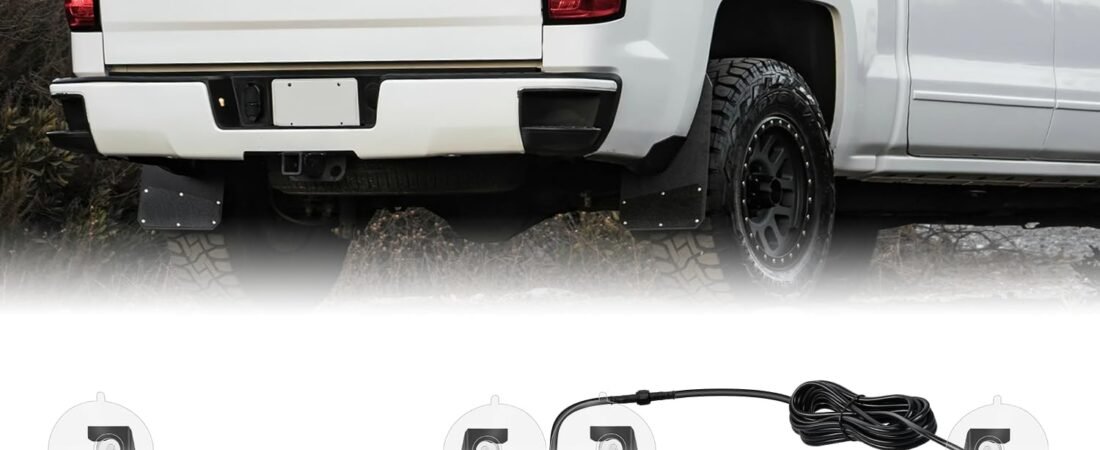
Warning lights serve a specific purpose on vehicles that operate around traffic, work in hazardous areas, or require additional visibility during roadside and emergency operations. A vehicle stopped on the shoulder, a snowplow working in poor weather, a construction truck operating near moving traffic, or an authorized emergency vehicle may need a conspicuous visual warning to help other road users recognize that something requires additional attention.
The Nilight 12LED Emergency Strobe Traffic Advisor Light Bar 2-in-1 Red Blue is an interior vehicle warning-light system designed around this type of application. According to Nilight’s product information, the system uses 12 high-intensity LED chips, operates with a 12–24V DC vehicle electrical system, offers multiple flashing patterns, and can be mounted at the front or rear windshield using suction-cup brackets.
Rather than thinking of a traffic advisor light as simply a bright flashing accessory, it is more useful to understand the different elements involved: light color, flash patterns, mounting position, power connection, visibility, windshield reflections, wiring, and local regulations.
The red-and-blue configuration also deserves particular attention. Those colors have specific legal and operational meanings in many jurisdictions, and they are not automatically permitted for ordinary private vehicles. The fact that a lighting product can be physically installed in a vehicle does not mean that every driver is legally allowed to operate it on public roads.
This article looks at the Nilight 12LED system from a practical and informational perspective. It explains the main features, possible applications, installation considerations, traffic-advisor patterns, maintenance requirements, and differences between interior warning lights and other vehicle-lighting categories.
What Is the Nilight 12LED Traffic Advisor Light Bar?
The Nilight 12LED Emergency Strobe Traffic Advisor Light Bar is a vehicle-mounted LED warning-light system designed for 12–24V vehicles.
The product uses two connected light sections containing a total of 12 LED light sources. Nilight lists applications including certain emergency vehicles, tow trucks, construction vehicles, snowplows, and other work vehicles.
The “traffic advisor” designation refers to the directional nature of some of the available flash patterns. Instead of simply flashing both sides simultaneously, certain patterns can sequence illumination from one side toward the other or from the center outward. This can communicate directional information to approaching drivers.
For example, a directional pattern may help communicate that traffic should move toward a particular side of a work area.
The product can be used at the front or rear windshield according to the manufacturer’s product description, with suction-cup mounting intended to avoid drilling into the vehicle.
Its design is therefore particularly relevant to vehicles where a temporary or interior-mounted warning-light installation is more practical than permanently mounting a larger roof light bar.
Key Features
12 LED Light Sources
The system uses 12 high-intensity LEDs distributed across the two light sections. Nilight states that the LEDs are designed to produce a pronounced warning signal and remain visible under conditions including daylight, darkness, rain, fog, and snow.
Visibility is an important consideration for any warning-light system.
However, actual visibility will always depend on environmental conditions, windshield tint, viewing angle, weather, surrounding traffic, ambient lighting, and the position of the vehicle.
A warning light should therefore be considered one part of a broader vehicle-safety system rather than a guarantee that other road users will see the vehicle.
Red and Blue Configuration
The product is offered in a red-and-blue configuration.
Color is not simply an aesthetic choice for emergency warning equipment. Different colors can have specific meanings under state, local, or national laws.
Red and blue warning lights are commonly associated with emergency-service vehicles in many jurisdictions. Rules vary considerably, however, and some areas restrict the use of particular colors to specific agencies or vehicle types.
For this reason, prospective users should verify applicable regulations before operating the light on public roads.
The manufacturer’s application list includes police and firefighter vehicles as well as other vehicle categories, but that product description should not be interpreted as legal authorization for any particular individual or vehicle owner.
18 Flashing Patterns
Nilight’s current product information identifies 18 selectable flashing patterns for this model.
The available patterns include combinations such as alternating flashes, fast flashing, steady illumination, and directional sequences.
Directional patterns can be particularly relevant for traffic-advisor applications.
Some patterns are designed to move from left to right, right to left, or from the center outward. Others alternate between the two sides.
The variety allows the same hardware to be used in different operational circumstances, although the appropriate pattern depends on the vehicle’s intended function and applicable regulations.
Directional Traffic-Advisor Function
A traffic advisor is different from a simple flashing beacon.
A conventional warning light may flash continuously to attract attention.
A directional traffic advisor can use a sequence to communicate movement or direction.
For example, a left-to-right sequence can visually indicate that traffic should move in a particular direction.
This is particularly relevant when a vehicle is positioned near an obstruction, work area, disabled vehicle, or other temporary hazard.
The exact interpretation of directional patterns is not necessarily universal, so organizations should use patterns consistently and according to their established procedures.
12–24V DC Compatibility
Nilight specifies an input voltage range of 12–24V DC.
This allows the system to be used across a range of common vehicle electrical systems.
Many passenger vehicles use 12V electrical systems, while larger commercial and work vehicles can use 24V systems.
Before connecting any vehicle accessory, users should confirm the electrical specifications of both the vehicle and the light.
Connecting a device to an incompatible electrical system can cause malfunction or damage.
Cigarette-Lighter Power Connection
The product uses a cigarette-lighter-style vehicle power connection rather than requiring a permanent hardwired installation. Nilight lists a heavy-duty power cord and an inline 10A fuse as part of the system.
This approach can make installation simpler for vehicles where a removable interior warning system is preferred.
The power cable is also long enough for positioning the light toward the front or rear of many vehicle interiors, although the exact routing depends on the vehicle.
Dual-Switch Control
Nilight describes a dual-switch design.
The controls allow the user to operate the power and select the desired flashing pattern without needing to access the light housing itself.
A remote control arrangement can be useful when the light is mounted on the windshield and the driver needs to operate it from the vehicle’s cabin.
The switches should still be positioned so that changing a pattern does not distract the driver while the vehicle is moving.
Pattern Memory
The manufacturer states that the system includes a memory function that recalls the last selected flashing pattern.
This means that after the light is turned off and subsequently activated again, it can return to the previously selected pattern rather than requiring the user to cycle through the available options every time.
For fleet or work vehicles that use the same warning pattern regularly, this can simplify operation.
Adjustable Mounting
The system includes adjustable brackets and suction-cup mounting hardware. Nilight describes a 90-degree adjustable bracket and suction cups for windshield installation.
This allows the light sections to be positioned according to the available mounting surface.
The exact mounting position remains important. A light should be installed securely and positioned so that it does not unnecessarily obstruct the driver’s view.
How a Traffic Advisor Works
A traffic advisor uses visual sequencing rather than relying solely on simultaneous flashing.
Imagine two groups of LEDs:
Left side → center → right side
A directional sequence can illuminate those sections in order.
The movement of light creates an apparent direction even though the individual LEDs themselves remain fixed.
This type of signaling can be useful when traffic needs to be guided around a stopped vehicle or work area.
For example, a vehicle operating on the shoulder might use a directional pattern to communicate the presence of the work vehicle and indicate the side toward which traffic should move.
However, the meaning of particular patterns is not universally standardized in every location. Agencies and fleet operators should follow their established lighting procedures.
How It Can Be Used
Authorized Emergency Vehicles
Emergency-service vehicles may use specialized warning lighting as part of their operational equipment.
The Nilight product information specifically mentions police and firefighter vehicles among its intended applications.
For these users, the light can serve as an interior warning system where an externally mounted roof light bar is not appropriate for a particular vehicle.
Actual operation must follow agency procedures and applicable laws.
Tow and Recovery Vehicles
Tow trucks and roadside recovery vehicles often operate near moving traffic.
A warning light can make a stationary work vehicle more noticeable, particularly when loading or securing another vehicle.
The red-and-blue version is not automatically legal for tow operators simply because the product is marketed toward multiple vehicle categories. Tow operators should confirm which warning-light colors and patterns are authorized in their jurisdiction.
Construction Vehicles
Construction and road-maintenance vehicles may operate near lanes of moving traffic, temporary closures, or work zones.
A traffic advisor can provide an additional visual signal to drivers approaching the work area.
Directional patterns may be useful when traffic needs to move around a work vehicle.
Again, local transportation regulations and work-zone standards should determine which light colors and patterns are permitted.
Snowplows
Snowplows can operate in low-visibility conditions involving snow, darkness, spray, and reduced contrast.
Nilight specifically lists snowplows among the vehicle applications for this type of product.
A warning-light system can provide an additional visual cue to approaching drivers, although drivers should never rely on warning lights alone when operating around snowplows.
Utility and Service Vehicles
Utility crews, roadside technicians, and other service personnel may work around traffic or on road shoulders.
Depending on local rules, warning lighting can help identify a stationary work vehicle.
The appropriate color and pattern will depend on the type of service and local regulations.
Front-Windshield Installation
Installing the light toward the front windshield can provide forward-facing visibility.
This may be useful when a vehicle needs to warn traffic approaching from the front.
However, windshield-mounted equipment needs careful positioning.
The light should not block:
- The driver’s direct view
- Rearview mirrors
- Forward-facing cameras
- Rain or light sensors
- Important dashboard information
- Other safety equipment
Modern vehicles often have cameras and sensors positioned near the windshield, especially around the rearview mirror.
Before installation, users should identify those systems and follow vehicle-manufacturer recommendations.
Rear-Windshield Installation
The same type of system can also be positioned toward the rear windshield where appropriate.
A rear-facing warning system can provide additional visibility to traffic approaching from behind a stopped work or service vehicle.
As with front installation, the light should not interfere with visibility or vehicle equipment.
Cable routing should also be planned carefully so that wires do not cross areas where they could interfere with passengers, controls, pedals, or other vehicle functions.
Installation Without Drilling
One of the practical characteristics of the Nilight system is its suction-cup mounting approach.
The manufacturer describes the included suction cups as a way to mount the light on the front or rear windshield without drilling.
This can be useful for vehicles that need removable warning equipment.
It can also be relevant to fleets where the same equipment may need to be transferred between vehicles.
However, suction-cup performance depends on the mounting surface.
A clean, smooth glass surface generally provides a better attachment surface than a dusty, textured, or contaminated one.
Before driving, users should verify that the mounting system is firmly attached.
Important Things to Consider
Red and Blue Lights Are Regulated
This is one of the most important considerations.
Emergency-light colors are regulated differently across jurisdictions.
In many places, red and blue lights are associated with law-enforcement or emergency-service vehicles, and unauthorized use may be restricted.
A product being available for purchase does not mean that operating it is legal for every vehicle.
Before installing or using a red-and-blue warning light on public roads, check the laws applicable to the vehicle’s location and intended use.
Do Not Assume Every Flash Pattern Is Permitted
The product provides multiple flashing patterns, but that does not mean every pattern is legal in every situation.
Some jurisdictions regulate:
- Flash frequency
- Color combinations
- Directional patterns
- Number of warning lamps
- Mounting location
- When warning lights may be activated
Fleet managers and vehicle operators should verify these requirements before selecting an operational pattern.
Visibility Should Not Be Obstructed
The warning light should be positioned so that it does not create an unnecessary obstruction.
This is particularly important for interior windshield installations.
A warning light can attract attention without needing to occupy a large portion of the driver’s field of vision.
Windshield Reflections
Bright interior lights can create reflections on the windshield.
Nilight’s product design includes an anti-glare or shroud-oriented approach intended to reduce unwanted windshield reflections, according to the manufacturer’s product information.
The exact level of reflection will vary by vehicle.
Windshield angle, tint, dashboard material, ambient light, and the position of the light can all affect the driver’s experience.
If the light creates significant glare, repositioning may be necessary.
Suction Cups Need Inspection
Suction cups are convenient but should not be treated as permanent structural mounting.
Temperature changes can affect suction performance.
Dust and contaminants can also reduce grip.
Inspect the mounting system before operation, particularly if the vehicle has been parked in extreme heat or cold.
Check the Power Connection
The product uses a vehicle power outlet and includes a 10A fuse.
Users should ensure that the vehicle’s power outlet and electrical system are appropriate for the accessory.
Avoid using damaged cables, loose connections, or overloaded power outlets.
Cable Routing Matters
Long power cables provide installation flexibility, but they also create another consideration.
Cables should be routed away from:
- Steering components
- Pedals
- Gear selectors
- Door hinges
- Airbag deployment areas
- Sharp edges
- Hot engine components
The cable should be secured so that it cannot interfere with driving.
Light Visibility and Weather Conditions
Nilight states that the 12LED system is intended to remain visible in conditions including daylight, rain, fog, and snow.
That does not mean visibility will remain identical in every environment.
Fog can scatter light.
Heavy snow can reduce contrast.
Rain can create reflections.
Bright sunlight can reduce the apparent intensity of warning lights.
The most effective approach is therefore to combine warning lighting with appropriate driving behavior, reflective markings, work-zone equipment, and other safety measures.
A warning light is an attention signal, not a substitute for safe positioning.
Maintenance
LED lighting systems generally require less routine maintenance than older incandescent systems, but the entire installation should still be inspected.
Clean the Lens
Dust and road residue can reduce optical clarity.
A clean lens helps preserve the intended appearance of the warning signal.
Use an appropriate cleaning method and avoid abrasive materials that could scratch the lens.
Inspect the Cable
Check periodically for:
- Cuts
- Crushed sections
- Exposed conductors
- Loose connectors
- Heat damage
- Damaged insulation
Electrical problems can create safety issues and should not be ignored.
Check the Suction Cups
Inspect the suction cups for dirt, cracking, or deformation.
If they no longer hold securely, the mounting system should be serviced or replaced.
Check the Pattern Controller
Make sure the switches continue to operate normally.
A pattern that changes unexpectedly could be problematic in professional applications where consistent signaling is required.
Check the Light Housing
Nilight describes the housing as aluminum with ABS end caps and highlights aluminum’s role in heat dissipation.
Inspect the housing for cracks, loose components, corrosion, or other damage.
Understanding the 10A Fuse
The included inline fuse is an important electrical protection component.
A fuse is designed to interrupt electrical current when the current exceeds a specified threshold.
Nilight identifies a 10A inline fuse in the product specifications.
Users should not bypass the fuse or replace it with a substantially higher-rated fuse simply because the original fails.
A blown fuse can indicate an underlying electrical issue.
If a fuse repeatedly fails, the system should be inspected rather than repeatedly replacing the fuse without investigating the cause.
Comparing Traffic Advisor Light Categories
Vehicle warning lights come in many configurations, and each category has a different purpose.
Interior Dash or Windshield Lights
These lights are installed inside the vehicle.
They can be relatively easy to install and remove and may not require permanent vehicle modification.
The Nilight 12LED system belongs broadly to this category.
Roof-Mounted Light Bars
Full-size roof light bars are mounted externally and can provide high visibility from multiple directions.
They are generally more permanent installations and may require dedicated wiring and mounting hardware.
Their legal requirements can also differ from interior warning systems.
Grille-Mounted Lights
Grille lights are installed near the front of the vehicle.
They can provide forward-facing visibility without occupying windshield space.
Installation typically requires more permanent mounting than suction-cup windshield systems.
Beacon Lights
Rotating or LED beacon lights are often mounted on roofs or elevated surfaces.
They provide an elevated visual signal that can be visible over other vehicles.
Work-Light Systems
Work lights illuminate an area rather than primarily warning other road users.
This is an important distinction.
A work light can help an operator see, while a warning light is intended to make the vehicle or hazard more noticeable.
The Nilight traffic advisor is primarily a warning system, not a general-purpose work lamp.
Traffic Advisor vs. Emergency Strobe
The terms “traffic advisor” and “strobe” are related but not identical.
A strobe function generally refers to the rapid flashing of light to attract attention.
A traffic advisor adds directional sequencing.
The Nilight system combines these concepts by offering multiple flashing modes, including directional patterns.
This flexibility makes it possible to use different visual signals depending on the operational situation, subject to applicable regulations.
Choosing an Appropriate Flash Pattern
When multiple patterns are available, it can be tempting to select the most visually dramatic sequence.
For professional use, however, consistency is usually more useful than novelty.
A fleet may establish a standard pattern so drivers know what a particular signal means.
For example:
- One pattern for general warning
- Another for directional traffic guidance
- Another for a stopped vehicle
- Another for a particular work operation
The exact configuration should follow organizational policy and applicable regulations.
The purpose of the pattern should be clear to the people using the vehicle.
Who May Find This Type of Light Suitable?
Authorized Emergency Personnel
Police, fire, and other authorized emergency personnel may use specific warning-light configurations according to applicable laws and agency policies.
Roadside Service Operators
Tow and roadside assistance operators may need additional visibility while working near traffic, subject to local regulations.
Construction Crews
Construction and road-maintenance crews can use appropriate warning equipment when working around traffic.
Snowplow Operators
Snowplows frequently work in low-visibility environments where additional warning signals can be useful.
Utility Fleets
Utility companies and municipal service vehicles may use warning lights when working near roadways.
The key qualification in all of these cases is authorization and compliance with applicable regulations.
Frequently Asked Questions
What is the Nilight 12LED Traffic Advisor?
It is an LED vehicle warning-light system with two connected light sections and a total of 12 LED light sources. It is designed for 12–24V DC vehicles and includes multiple flashing patterns.
What colors does this version use?
The model discussed here uses red and blue illumination.
Does it have directional patterns?
Yes. Nilight lists directional patterns such as left, right, and center-out sequences among the available patterns.
How many flashing patterns are available?
The manufacturer’s current product information identifies 18 selectable patterns for this model.
Can it be installed without drilling?
The system is designed with suction-cup mounting for windshield installation, allowing installation without drilling into the vehicle.
Can it be mounted on the front windshield?
Yes. The manufacturer describes front-windshield installation as one of the intended mounting configurations.
Can it be mounted on the rear windshield?
Yes. Nilight also identifies rear-windshield mounting as an intended application.
What voltage does it use?
The product is specified for 12–24V DC vehicle systems.
How does it get power?
It uses a vehicle cigarette-lighter-style power connection. The manufacturer lists a 10A inline fuse as part of the electrical setup.
Does it remember the last flashing pattern?
Yes. Nilight states that the system includes a last-pattern memory function.
Is the light suitable for ordinary private vehicles?
Physical installation may be possible, but legal operation is a separate issue. Red-and-blue warning lights are restricted in many jurisdictions. Vehicle owners should check local laws before using the system on public roads.
Can a tow truck use red-and-blue warning lights?
That depends on the jurisdiction and vehicle classification. A tow truck operator should verify the colors and patterns legally authorized for that type of vehicle rather than assuming that every marketed configuration is permitted.
Can it be used on a construction vehicle?
The manufacturer lists construction vehicles among its applications. However, the appropriate color, pattern, and operating conditions depend on local regulations.
Is this a work light?
No. It is primarily a warning and traffic-advisor light. It is designed to make a vehicle more noticeable rather than illuminate a work area.
Does the light need permanent wiring?
The listed version uses a vehicle power plug, so it does not require the same type of permanent hardwired installation as some professional light bars.
Can the light be used in bad weather?
Nilight states that the warning light is designed to remain visible in conditions such as rain, fog, snow, and darkness. Actual visibility will depend on the severity of the conditions and the installation.
How should the light be positioned?
It should be mounted securely while maintaining the driver’s field of view and avoiding interference with vehicle safety systems. The exact position should also comply with applicable regulations.
Why does the light have multiple patterns?
Different patterns can provide different visual signals. Directional sequences can help communicate traffic movement, while other patterns provide general warning illumination.
Does a flashing pattern make the vehicle legally authorized?
No. A lighting pattern does not provide legal authorization. Vehicle type, operator status, color, location, and applicable laws determine whether a warning-light system can legally be used.
How should the suction cups be maintained?
Keep the mounting surfaces clean and inspect the cups regularly for damage or loss of grip.
What should I do if the fuse keeps blowing?
Do not simply replace it with a higher-rated fuse. Repeated fuse failures can indicate an electrical problem that should be investigated.
Conclusion
The Nilight 12LED Emergency Strobe Traffic Advisor Light Bar 2-in-1 Red Blue is a vehicle warning-light system built around two connected LED sections, directional signaling, multiple flash patterns, and windshield-oriented installation. Nilight specifies 12–24V DC compatibility, a cigarette-lighter power connection, a 10A inline fuse, suction-cup mounting, and 18 selectable flashing patterns for the product.
Its traffic-advisor functionality distinguishes it from a basic flashing beacon. Directional sequences can provide visual information about traffic movement, which can be relevant when a vehicle is stopped near a work area, roadside incident, snow-removal operation, or other situation requiring increased visibility.
The suction-cup design also gives the system a different installation approach from permanently mounted roof or grille lights. For compatible vehicles, this can make installation and removal more straightforward without drilling into the vehicle.
At the same time, warning-light equipment should always be treated as safety-related vehicle equipment rather than ordinary decorative lighting. The red-and-blue color combination is subject to significant legal restrictions in many jurisdictions, and the availability of a product does not establish that every vehicle operator can legally use it.
Proper mounting is equally important. The light should not interfere with the driver’s view, windshield cameras, sensors, mirrors, airbags, or other vehicle systems. Power cables should be routed safely, and suction-cup mounts should be checked regularly.
The most appropriate way to evaluate a traffic advisor is therefore to look at the complete installation: vehicle type, intended use, legal requirements, mounting location, visibility, power connection, flash pattern, and operating procedures.
For authorized users who need a compact interior warning-light arrangement, understanding those factors can help determine whether this type of traffic advisor fits the vehicle and its intended role.